Table Of Content
The project-based curriculum for this program allows students to build their own focus area. Some popular options include Virtual and Augmented Reality, Human-Computer Interaction (HCI), Interactive Product Design and Development, Game Design and Development, Arts and Media Production, UI/UX, and Learning and Education. Classes, workshops, visiting speakers, and studios provide the opportunity for graduate students to work directly with industry professionals on real-world issues. Students may also create a focus through required free electives totaling 12 credit hours. Elective examples include Advanced Digital Techniques, Digital Representation, and Art + Design Laboratory. Course examples for the program include Visualization, Art + Design Laboratory, Creative Technology, Digital Imaging, Advanced Digital Techniques, Digital Motion, and Animation.
The Trustpilot Experience
The McClure School at Ohio University has the highest job placement rate in the Scripps College of Communication. Graduates of the ITS ECT Program (VR/AR Track), have been recruited by major studios and companies such as Microsoft, Sony, Unity, Warner Brothers, Disney, and Bethesda. Armed Forces, in state and federal government offices, and with consulting companies such as Deloitte, Accenture, Capgemini, Booz Allen Hamilton, and PwC.
What are the top AR/VR schools and colleges in the US for 2022?
Housed in the Media Arts, Data, and Design Center (MADD Center), the Weston Game Lab launched in in 2019. MADD Center groups focus on virtual reality, GIS, digital fabrication, data visualization, and other new, evolving, and emerging technologies. Through the Lab, faculty, students and staff collaborate on the research and development of games of all kinds. Students in all programs may participate in the Future Reality Lab and NYC Media Lab. Students in the IDM Program will complete the Tandon Engineering core, media studies courses taken in the Department of Media, Culture, and Communication (MCC), and additional courses in math, science, humanities, and social sciences.
Google Pixel 8 / Pro Series
The MIT.nano Immersion Lab highlights activities such as developing new software and hardware concepts for immersive experiences, prototyping advanced tools for augmented and virtual reality (AR/VR), and visualizing data. The Immersion Lab connects engineers and scientists with musicians, artists, and performers performers through creative projects across multiple disciplines. The School of the Art Institute of Chicago (SAIC) is one of the oldest accredited independent schools of art and design in the country. Founded as the Chicago Academy of Design in 1866, SAIC serves around 3,550 students enrolled in degree programs covering 50 formal areas of study. Students at SAIC are also free to customize their education among 24 departments or concentrate in one single medium. Programs in the DMS explore games, AR/VR, robotics, experimental film, interactive, fiction, and many other areas.
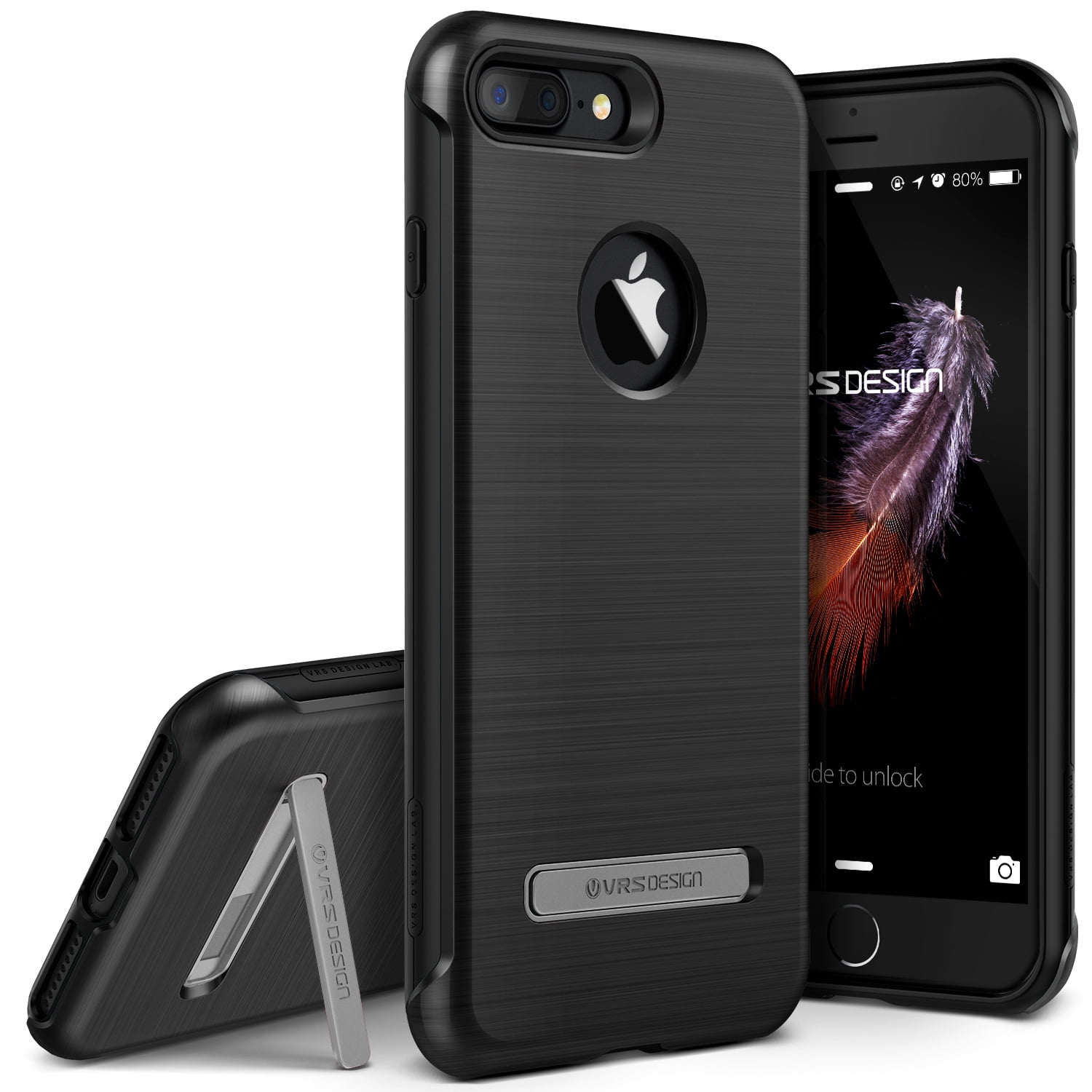
The 7 Best Samsung Galaxy Fold 4 Cases - MUO - MakeUseOf
The 7 Best Samsung Galaxy Fold 4 Cases.
Posted: Fri, 28 Oct 2022 07:00:00 GMT [source]
In addition to advancing AR/VR research, Lab participants will work on projects in 3D computer vision and perception, object recognition, graphics, game science and education, distributed computing, stream processing, databases and computer architecture, and privacy and security. Massachusetts Institute of Technology (MIT) was incorporated on April 10, 1861, just two days before the start of the Civil War. Serving 12,000 students, MIT offers more than 100 programs across seven colleges and schools including Schwarzman College of Computing, Sloan School of Management, and the Schools of Architecture and Planning; Engineering; Humanities, Arts, and Social Sciences; and Science. University of Minnesota (U of M) was established in 1851—seven years before Minnesota became a state.

Programs at SJSU are managed across nine academic colleges housing dozens of schools and departments. Programs at University of Minnesota are housed across dozens of colleges, schools, and departments. The College of Science & Engineering (CSE) is home to the Department of Computer Science and Engineering, which has several pathways to study AR/VR. While the BA is administered through the Department of Computer Science and Engineering, the degree is awarded by the College of Liberal Arts (CLA).
The Lab provides access to high-end VR equipment that can be used to develop virtual or augmented reality content and interact with imagined worlds. Students can check out equipment such as a VIVE headset, Gear VR, Google Cardboard, 360 cameras, GoPros, DSLR cameras, video cameras, and other media capture devices. Other MiDAS Program features include opportunities to work on real-world projects within the industry-standard, a collaborative environment, personal attention from faculty and content area experts, and professional portfolio development. UF MiDAS Students also have access to the UF Reality Lab at the Digital Worlds Institute. MS students have the opportunity to customize the curriculum to support their goals. Options include courses and research in AI, HCI, distributed interactive systems, AR/VR for Virtual Analytics, Theoretical Computer Science, and Computer Graphics and Human Computer Interfaces for Spatial Applications, Visualization, and Computer Entertainment.
Savannah College of Art and Design (SCAD) is home to the SCAD Digital Media Center. Launched in Fall 2009, the Center houses majors within the School of Digital Media and the School of Entertainment Arts. The School of Digital Media is home to an Immersive Reality Program that leads to a BFA.
The Best Samsung Galaxy S8 and S8+ Cases - PCMag
The Best Samsung Galaxy S8 and S8+ Cases.
Posted: Wed, 26 Apr 2017 07:00:00 GMT [source]
The Trustpilot Experience
We are dedicated to enhancing our clients' self-esteem, dignity and job readiness, and creating opportunities for self-sufficiency. Labeled Verified, they’re about genuine experiences.Learn more about other kinds of reviews. ATS students will take courses in VR, AR & Games, Programming, Electronics & Kinetics, Bio Art, Audio, Light, and History & Theory. Topics and classes for the Concentration Include Virtual Reality, Experimental Game Lab, Mixed Reality, Performance, n3w_b0d1es, and Video Game Music Composition. Warren McClure School of Emerging Communication Technologies (ECT), which houses the Information and Telecommunication Systems Major, (ITS ECT) with a VR/AR Track.
Serving more than 10,000 students, Parsons provides more than 100 degree and diploma programs across campuses in New York City; Paris, France; Shanghai, China; and Mumbai, India. Options include for students interested in AR/VR include BFA and MFA degrees in Design and Technology, and a Minor Immersive Storytelling. Soon, students in all programs will have access to the expanded Savannah Film Studios. Once completed, the expanded Savannah Film Studios will be the largest and most comprehensive university film studio complex in the nation. Launching in three phases between 2021 and 2023, the 10.9-acre facility will include a next-generation XR stage for virtual productions, new soundstages, and a Hollywood-caliber film backlot, among other features. The Ann S. Bowers College of Computing and Information Science (CIS) is home to the Computer Science Department, which serves 1,340 students enrolled in a variety of BS, MS, and PhD Programs in Computer Science (CS).
The IV/LAB is equipped with a 4-wall CAVE Virtual Reality display; a Multi-Surface, Multi-Touch Virtual Reality Environment; and a 3D Haptic (Force-Feedback) Display. The IV/LAB also works with the visualization facilities at the Minnesota Supercomputing Institute (MSI), which provides software, hardware, and experts to help students in all research areas. Students in the AR/VR PhD Program at University of Rochester typically have a background in Computer Science, Optics, Biomedical Engineering, Electrical and computer Engineering, or Brain and Cognitive Sciences. Housed in the School of Arts & Sciences’ Georgen Institute for Data Science, the program focuses on AR/VR interfaces and applications, AR/VR platforms and computation, perceptual-cognitive aspects of AR/VR design, and machine intelligence for AR/VR systems.
The school, which houses hundreds of programs and initiatives, has partnerships in over 48 nations and on every continent. UChicago serves 17,470 students, with more than 4,400 students enrolling each year from nearly 115 countries. Pathways for students interested in AR/VR include BS, MS, and PhD degrees in Computer Science (CS). A Minor is available as well as Dual Degrees including a CS BS/MS and Accelerated CS BS/PhD. Housed in the RPI School of Sciences, the Computer Science Program focuses on the design, analysis, communication, implementation, and application of computational processes. Optional concentrations include Artificial Intelligence (AI), Games, Robotics, Vision, Graphics, Data Systems, and Software Theory and Algorithms.
Students in the program have the opportunity to focus in a computation-related field of their choice through coursework and the doctoral thesis. Other UCSB labs include the RE Touch Lab (Haptics, Robotics, and VR), Systemics Lab (Robotics, Interface Design, Sustainable Computing Paradigms), and transLAB (Worldmaking + Social VR, Immersion, Performative Interactive Arts). Current ReCVEB research groups include Future of Interactive Technologies; Navigation and Spatial Cognition; Social Interactions and Communication; Education and Training; and Low Vision & Sight Restoration. In addition, the Center houses a 30-by-30 foot open room and a tracking system, which allows for experiments in fully immersive walking VR. Students in all CS programs have access to the Interaction Visualization Lab (IV/LAB) and the Illusioneering Lab. Students in the Department may specialize in areas such as Human-Computer Interaction (HCI), Machine Learning, Programming Languages, and Computer Architecture.


No comments:
Post a Comment